
Every day, things change.
A worker starts a shift. A device enters a secure facility. Someone leaves a designated work area for lunch. A phone connects to a different network. An employee ends their day.
Each of those moments represents a change in context.
The question is: what happens next?
Organisations have access to more information than ever before. Devices can provide location and movement data. Networks can signal changes in connectivity. Systems know the time. Operational platforms can track schedules, assets and activities.
But information alone doesn't improve security, safety or efficiency.
The real value comes when organisations can use context to help ensure the right action happens under the right conditions.
Context is information. Action is the outcome.
-
Knowing that a device has left a secure facility is useful.
-
Knowing that a worker has entered a designated area can be useful.
-
Knowing that a shift has ended or a device has connected to a new network can also be useful.
But collecting information is only the first step.
The more important question is: Does that change in context require a response?
And if it does, can the appropriate action happen consistently and automatically?
This is where context moves beyond visibility and becomes operational intelligence.
When the real world changes, the right response may change too.
Policies and procedures are often designed around specific conditions. For example:
- A device inside a secure location may require different controls than one outside it.
- A worker on shift may require different access or protections than when they are off duty.
- A device connected to a trusted network may be treated differently than one connected to a public network.
- Entering or leaving a designated area may trigger a safety or operational workflow.
The challenge is that the real world doesn't stand still.
People move. Devices travel. Networks change. Shifts begin and end.
And organisations can't always rely on someone noticing every change, remembering every procedure and manually initiating the appropriate response.
That's where context-aware automation can make a meaningful difference.
Better security starts with better context.
Security and access policies don't always need to remain the same simply because the user and device haven't changed.
The environment around them may have.
A device may:
- Enter or leave a designated location.
- Connect to a different network.
- Begin moving between locations.
- Enter a different jurisdiction.
- Be used during or outside designated working hours.
Each change can provide valuable context for determining whether an existing policy should remain in place or whether a different response is appropriate.
This doesn't mean replacing existing security or UEM investments. In fact, context can make those investments more dynamic.
By integrating real-world signals with existing systems and policies, organisations can help ensure that security controls are better aligned with current conditions not just static assumptions.
Same device. Same user. Different context. Potentially different response.
Context can also support safer operations.
The value of context extends beyond cybersecurity.
For organisations with field workers, mobile teams or employees working independently, knowing what is happening in the real world can help support established safety processes.
Context might include:
- Entering or leaving a designated work area.
- Starting or ending a shift.
- Changes in location or movement.
- A missed check-in or other event requiring attention.
Of course, technology doesn't replace people, safety procedures or good judgement.
But it can help provide timely information and support appropriate workflows when predefined conditions change.
That matters because safety processes often depend on timing.
The right information is most useful when it is available when something is happening, not hours later when someone finally reviews a report.
And efficiency? That's where automation earns its keep.
There is also an operational side to all of this.
Consider how many processes depend on someone manually recognising that something has changed.
Someone may need to:
- Monitor a location.
- Check whether an employee is on shift.
- Notice that a high value asset has moved.
- Identify a network change.
- Determine which procedure applies.
- Initiate the next step.
Individually, these tasks may seem small.
Across hundreds or thousands of people, devices and assets, they can add up quickly.
Context-aware automation can help reduce unnecessary manual intervention by allowing organisations to define in advance what should happen when specific conditions occur.
In simple terms: When this context changes, take this action.
The result isn't automation for automation's sake.
It's the opportunity to make processes more consistent, timely and efficient.
The goal isn't to automate everything.
It's to automate the right things.
Automation is most valuable when it understands the circumstances surrounding an event.
After all, the same action isn't appropriate in every situation.
A change in location may matter in one scenario and be irrelevant in another. A network change may require a response during a work shift but not outside working hours. Entering a particular area may have security implications, safety implications or operational implications depending on the organisation and its policies.
That's why context matters.
It helps organisations move beyond simple triggers and toward better-informed actions.
From context to action
The opportunity isn't simply to collect more data about people, devices and operations.
It's to make that information useful.
When conditions change, Organisations can ask:
- Does this matter?
- What does this change tell us?
- What should happen next?
The answers will be different for every organisation. But the principle remains the same:
Better context can lead to better decisions, and better decisions can lead to better outcomes.
Whether the goal is to strengthen security, support worker safety or improve operational efficiency, real-world intelligence can help organisations respond to what is happening now.
Because context is constantly changing.
The question is whether the right action follows.
Frequently Asked Questions
What is context-aware automation?
Context-aware automation uses information about real-world conditions to help determine when an automated action should occur.
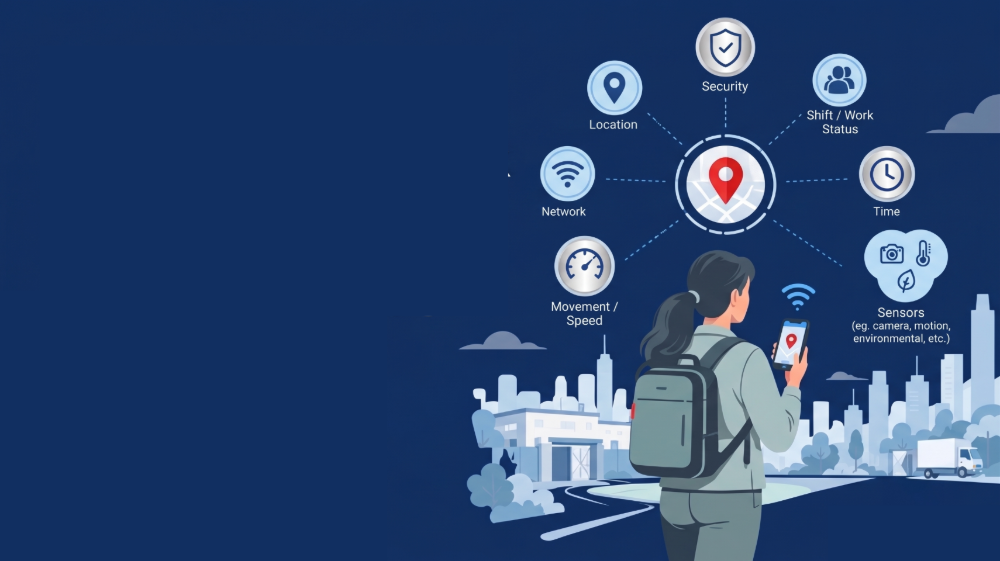
Context can include factors such as location, network, time, movement and shift status. When predefined conditions change, an organisation can trigger an appropriate policy, workflow or response.
The goal is not simply to automate tasks, but to help ensure actions are relevant to the current situation.
How can context improve security?
Context can help security systems respond to changing conditions rather than treating every situation the same.
For example, a device may require different policies depending on whether it is inside or outside a designated location, connected to a trusted or public network, being used during a work shift or operating in a different jurisdiction.
By combining real-world context with existing security and UEM policies, organisations can make security controls more responsive to current conditions.
What types of information can provide context?
Depending on the organisation's technology and requirements, context may include:
- Location
- Geofencing
- Network connection
- Time
- Movement or speed
- Shift or work status
- Changes in the surrounding environment
Additional context can also come from integrations with other sensors and systems. Depending on customer requirements, this may include information from cameras, motion sensors, environmental sensors and other connected technologies.
The goal is to bring together the information that is relevant to a particular environment or use case. What matters and what action should follow—will depend on the organisation's policies, operational needs and available technology.
How can context-aware technology support worker safety?
Context-aware technology can help support existing safety procedures by providing timely information when predefined conditions change.
For example, changes in a worker's location, movement or shift status may help trigger an appropriate safety workflow or notify the right people when attention is required.
Technology does not replace safety procedures, training or human judgement. However, it can help organisations respond more consistently and with better awareness of what is happening in the real world.
How can context-aware automation improve operational efficiency?
Many operational processes require someone to notice a change, determine what it means and initiate the next step.
Context-aware automation can reduce unnecessary manual intervention by allowing organisations to define actions in advance based on specific conditions.
For example, a change in location, network or shift status could automatically trigger an appropriate workflow.
This can help organisations create more consistent processes while allowing employees to focus on work that requires human attention and decision-making.
Does context-aware automation replace existing UEM or security tools?
Not necessarily.
Context-aware technology can complement existing UEM, MDM and security investments by providing additional real-world intelligence that can inform policies and automated actions.
For example, an organisation may use location, network, movement, time or shift information to trigger or modify policies within its existing technology environment.
The goal is to help existing systems become more responsive to changing real-world conditions.